Climbing gear inspection & replacement guidelines
Regular inspection of climbing gear is critical for safety. The guidance below is the same general content RackTracker uses in the app when you add gear and open inspection info. Always follow the specific manufacturer’s recommendations for your equipment.
What manufacturers generally recommend
Across climbing soft goods and hardware, makers typically expect a quick check before every use, a more thorough periodic inspection, immediate retirement afterchemical exposure, or visible damage, and hard age or use limits published in each product’s instructions. Details differ by brand and model—Petzl, Edelrid, Mammut, Beal, Sterling, and others each publish their own criteria.
- Inspect before each use
- Perform detailed inspection every 12 months
- Replace gear immediately if any damage is found
- Replace gear that has that you no longer trust (if you have a gut feeling)
- Replace gear that has been exposed to chemicals
Default intervals used when adding gear in RackTracker
When you pick a category, RackTracker prefills inspection and (when applicable) replacement thresholds so you can track dates and climbs. Defaults are editable and meant for personal logging— they are not a claim that gear remains safe until that date.
| Gear type | Detailed inspection | Suggested replacement threshold |
|---|---|---|
| Rope | Every 12 months | 60 months (5 years) |
| Harness | Every 12 months | 84 months (7 years) |
| Quickdraw | Every 12 months | 120 months (10 years) |
| Slings (Including Cam Slings) | Every 12 months | 60 months (5 years) |
| Cam, nut, carabiner, locking carabiner, belay device, ice screw, crampon, ice tool, helmet, other | Every 12 months | No mandatory default—inspect and retire based on condition and manufacturer guidance |
Type-specific checks
Use these checklists as a quick memory aid aligned with the in-app inspection info. For ropes especially, read your maker’s instructions—lifespan and retirement triggers vary by brand and how hard the rope is used.
Rope
- Inspect the entire length for cuts, abrasions, or soft spots
- Check the core for any inconsistencies
- Replace after 3–5 years of regular use
- Replace immediately if the sheath is damaged
More detail: When to retire a climbing rope — checklist, RackTracker defaults, and manufacturer references.
- Petzl — When should my rope be replaced?
- Edelrid — How do I check my climbing rope?
- Mammut — Ropes (retirement guidance)
- Beal — Product Notice / IFU (example rope)
- Sterling — Rope care & inspection
Harness
- Check all stitching for wear or damage
- Inspect tie-in points and belay loop for excessive wear
- Replace after 5–7 years of regular use
- Replace immediately if any load-bearing parts show damage
Petzl — How to inspect your climbing harness
Quickdraw, carabiner & locking carabiner
- Check gate action for smooth operation
- Inspect for cracks, sharp edges, or deep grooves
- Replace after 10 years of regular use
- Replace immediately if gate doesn’t close properly
View manufacturer guidelines (Wild Country)
Sling
- Check for fraying, cuts, or abrasion
- Inspect stitching for damage
- Replace after 5 years of regular use
- Replace immediately if any damage is visible
Cam & nut
- Check moving parts for smooth operation
- Inspect cables and slings for damage
- Replace after 10 years of regular use
- Replace immediately if any component shows damage
Belay device
- Check for excessive wear or grooves
- Inspect moving parts for proper function
- Replace after 10 years of regular use
- Replace immediately if any cracks or deep grooves appear
Helmet, ice gear & other
- Follow manufacturer’s specific guidelines
- Inspect regularly for signs of wear or damage
- Replace if any doubt exists about the gear’s integrity
How RackTracker helps you act on this
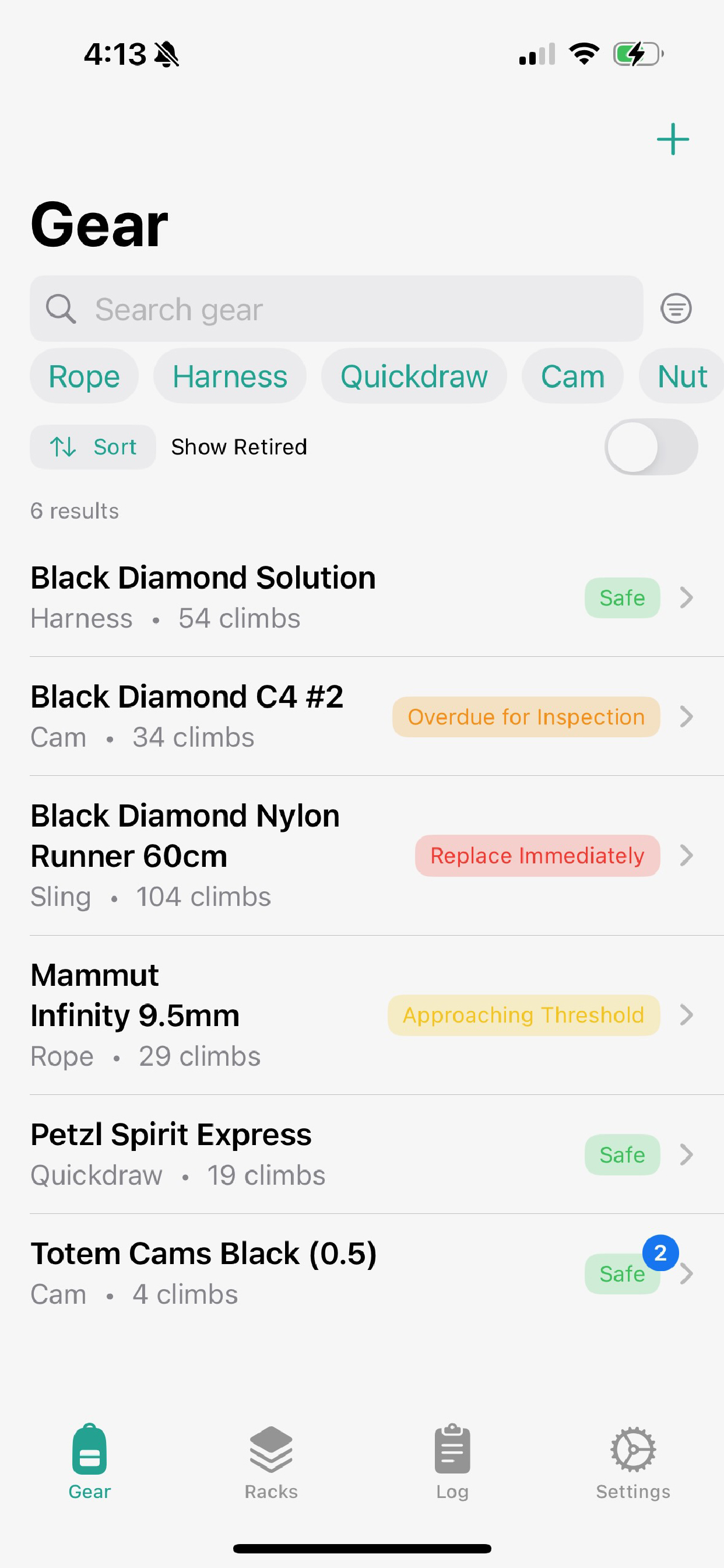
RackTracker is a personal climbing and slackline gear log: thresholds, status colors, climb counts, optional weight, and CSV export so retirement and inspection dates stay visible—not a replacement for manufacturer PPE instructions.
- Thresholds & status colors — reminders for inspection and replacement, with Safe / Approaching / Overdue / Replace states on your list.
- Usage logging — climb counts per piece so soft goods don’t only age on the calendar.
- Optional weight — record grams per item; climbing racks total known weights and mark partial totals.
- CSV export — export the visible gear inventory or a rack packing list to CSV via the share sheet for backup or spreadsheet workflows.
FAQ
When should I retire a climbing rope?
When inspection finds damage, after chemical exposure, when you no longer trust it, or when you hit your manufacturer’s age/use limits. See When to retire a climbing rope for the full checklist and Petzl, Edelrid, Mammut, Beal, and Sterling references.
How often should I inspect climbing gear?
Before each use, plus a detailed periodic inspection on a schedule that matches your manufacturer. RackTracker defaults to a 12-month detailed-inspection reminder for most categories.
How long does a climbing harness last?
It depends on use and the maker. In-app guidance notes about 5–7 years of regular use and immediate retirement if load-bearing parts are damaged. Follow Petzl or your harness manufacturer.
What replacement intervals does RackTracker use by default?
Editable prefills when you add gear: rope 60 months, harness 84 months, quickdraw 120 months, sling 60 months, with 12-month inspection reminders. Hardware may have inspection-only defaults.
Does RackTracker replace manufacturer inspection guidance?
No. It helps you track dates and use. Manufacturer instructions and your own inspection always win.
How do I track climbing gear retirement dates?
Add gear with purchase date and thresholds, log climbs, watch status colors, and optionally export CSV. Download RackTracker from the App Store to keep the log on your phone.
Does this apply to slackline gear too?
You can log slackline equipment in RackTracker. Use manufacturer guidance for webbing and hardware; the interval table above is oriented around climbing categories.